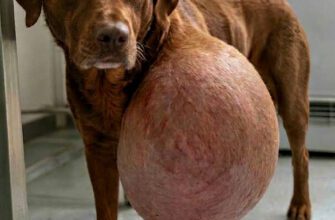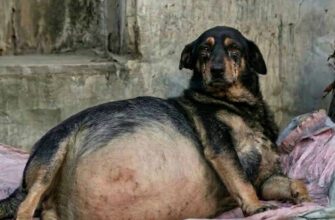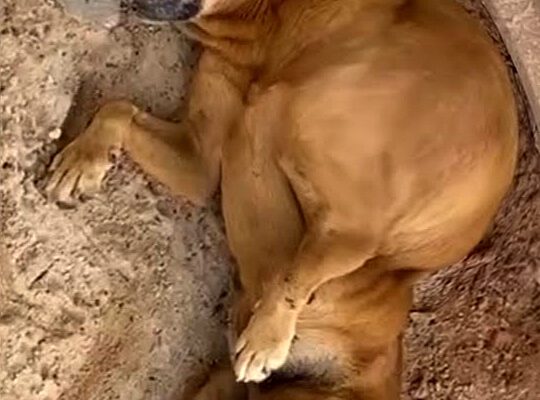
When they found him, he could barely move.
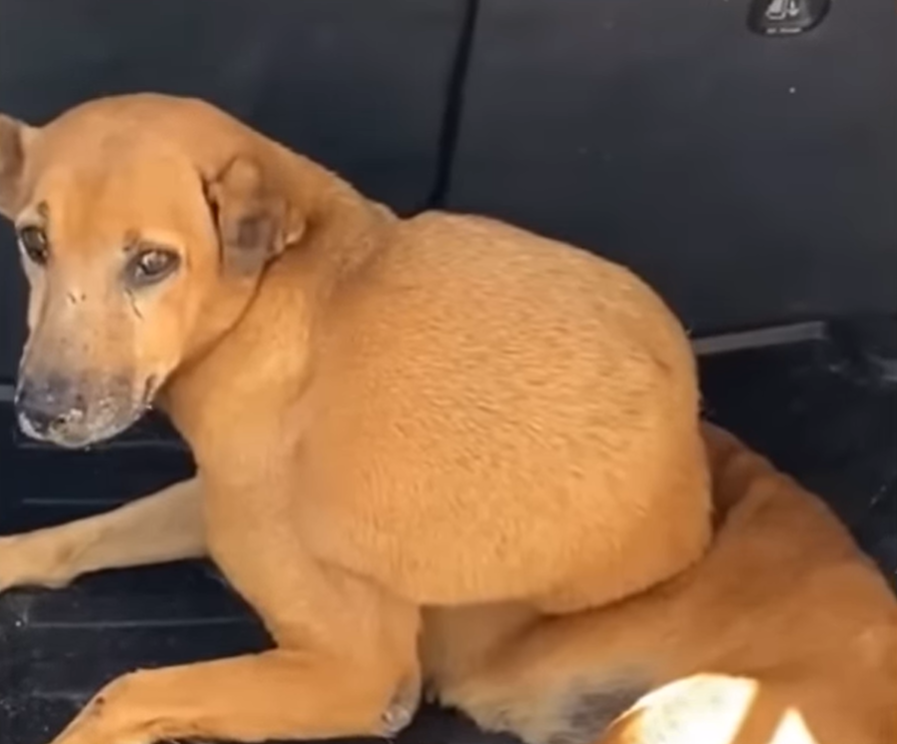
He was standing alone near the edge of the road, holding his body in an unnatural position, trying not to put weight on his front leg. That leg was g.r σtesquely s.w σllen — far larger than it should have been, heavy, distorted, clearly causing him constant p.a ìn. The t.u ḿor was impossible to miss. It hadn’t appeared overnight. It had grown slowly, silently, while he continued to survive with it day after day.
He was thin, far too thin. His ribs were visible beneath dull, dirty fur. Every movement looked exhausting, as if even standing required more strength than he had left. Yet despite everything, he was still there. Still breathing. Still holding on.
His eyes told the real story.
They weren’t aggressive. They weren’t panicked. They were tired. The kind of tired that comes from long-term s.u ƒfering, from learning not to expect kindness, from understanding that p.a ìn is simply part of life. But deep inside that exhaustion, there was still a small spark — the instinct to survive.
When the volunteers approached him, he didn’t try to escape.
He didn’t bark.
He didn’t fight.
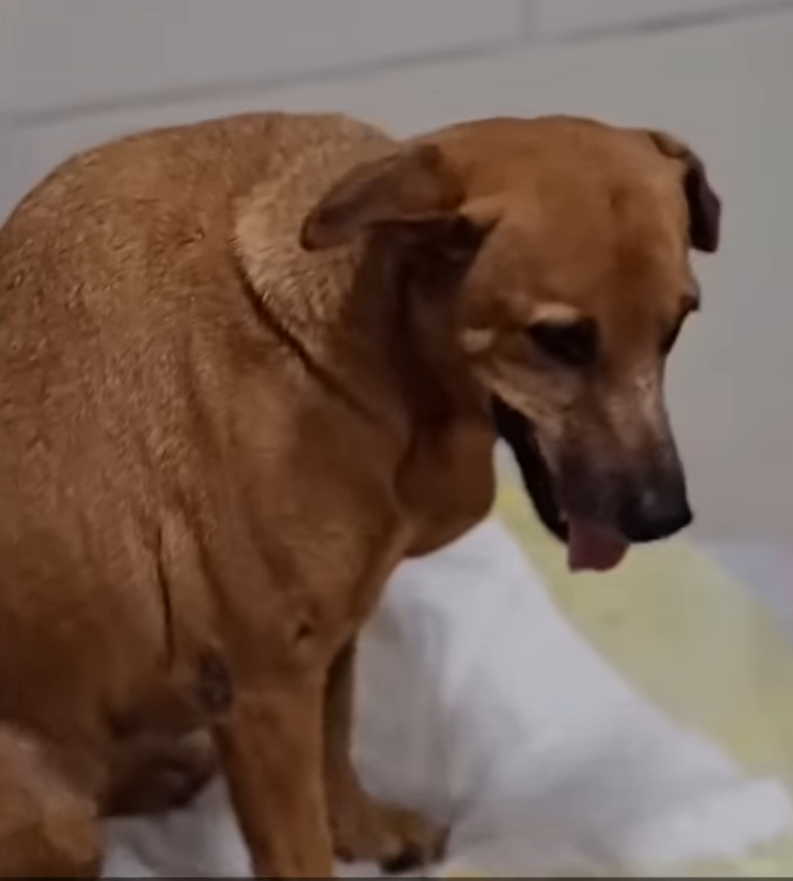
He looked at them quietly, studying their faces, as if weighing a decision that mattered more than anything else. And then he allowed them to help. That single moment of trust changed everything.
They took him straight to the clinic.
There, the veterinarians examined him carefully, and the situation became clear immediately. The t.u ḿor on his leg was massive. It was pressing on tissue, restricting movement, and slowly poisoning his body. Without surgery, he would not last much longer. There was no time to wait.
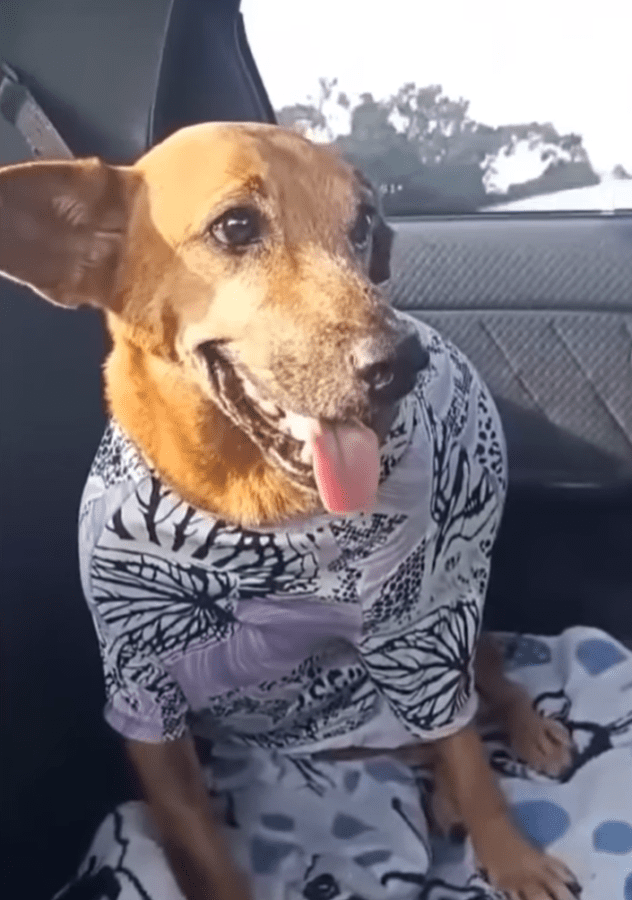
He was prepared for the operation — warmed, hydrated, given pain relief. His body trembled from weakness, but he remained calm, almost unnervingly so, as if he somehow understood that this was his chance. The chance he had never had before.
The surgery lasted for hours.
The veterinarians worked with intense focus, removing the t.u ḿor piece by piece, doing everything possible to save not only his leg, but his life. It was delicate, difficult work. At any moment, something could have gone wrong. But they didn’t give up.
And neither did he.
When the surgery was finally over, he was alive.
Recovery was not easy. The first days were slow and p.a ìnful. He struggled to stand. He hesitated to move. He had to relearn how it felt to exist without constant p.a ìn. Volunteers visited him every single day. They spoke gently, cleaned his w.o ∪nds, encouraged him, stayed near him so he wouldn’t feel alone.
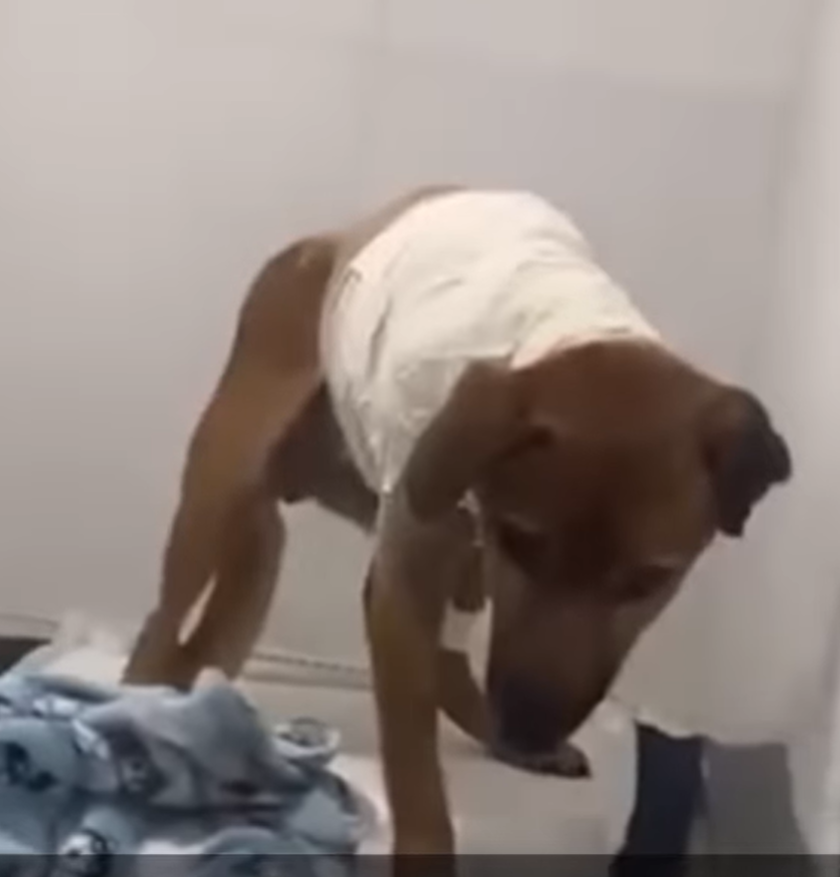
Little by little, he began to change.
His eyes became brighter. His body relaxed. He started eating with real appetite. One morning, he surprised everyone by wagging his tail — just slightly, uncertainly, but enough to make it clear that something inside him had shifted.
Then came his first steps.
Careful at first. Slow. But p.a ìn-free.
Days turned into weeks.
Today, he is almost impossible to recognize.
He runs now — freely, confidently, happily. He plays with other dogs, chases them across open space, tumbles into the grass, gets back up, and runs again as if making up for lost time. His leg no longer limits him. His past no longer controls him.
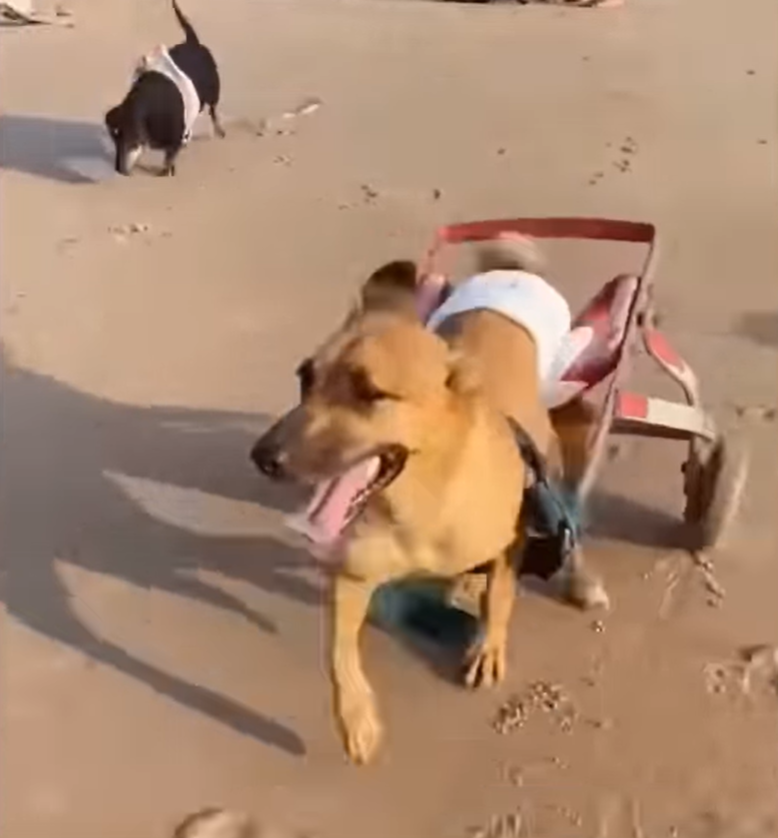
He is joyful.
All because someone noticed him.
All because volunteers refused to walk past.
All because people chose compassion over indifference.
One decision saved a life.
And now, every time he runs with other dogs, every time he plays without p.a ìn, every time his tail wags without fear, he reminds us of a simple truth:
Even the heaviest s.u ƒfering can be left behind — when someone chooses to stop, care, and act.
This is what rescue looks like.
➕