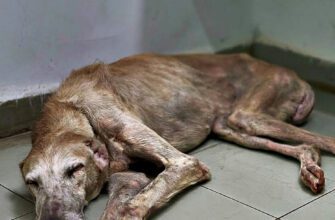
When people first noticed him, many turned away.
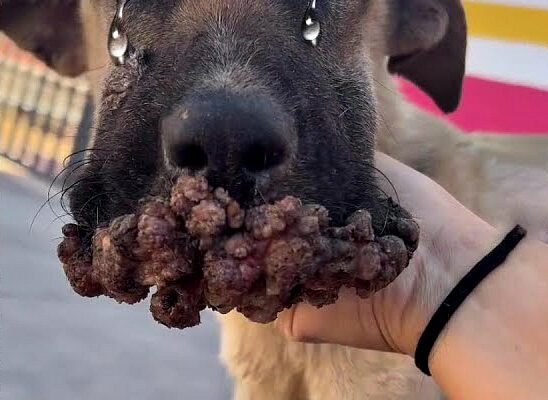
His face was covered in growths — thick clusters of papillomas that had spread across his mouth, lips, and muzzle. They distorted his features so badly that some people mocked him, others avoided him entirely. His smell, his appearance, his condition made him invisible in the c.r ∪elest way possible.
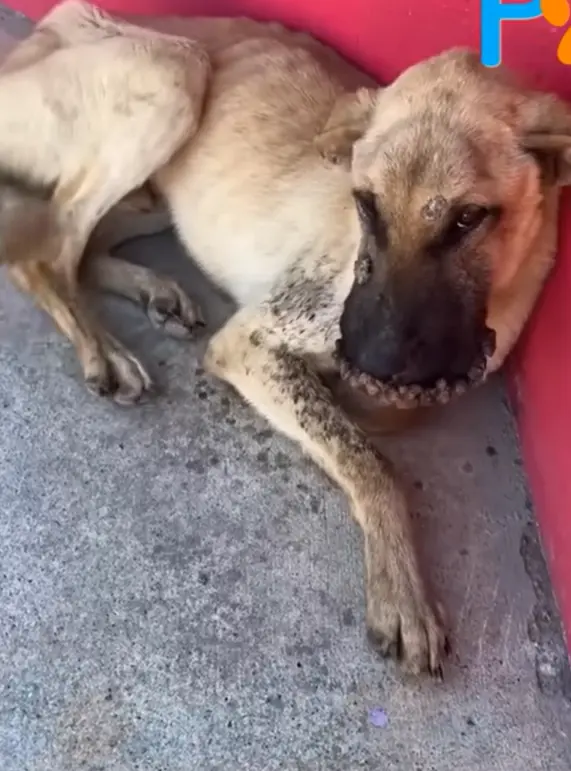
But he was still there.
Standing. Waiting. Wagging his tail.
Despite the p.a ìn, despite the hunger, despite the looks of dis.g ∪st, he continued to approach people, hoping that one of them would see past what covered his face and notice the life behind his eyes.
Eating was t.o ŕture.
Every attempt to take food into his mouth caused p.a ìn. The papillomas made chewing difficult, swallowing slow and exhausting. He tried anyway. Always tried. Because hunger does not disappear just because eating h.u ŕts. His body grew thinner, weaker, but his will remained.
Then one day, someone stopped.
Not to stare.
Not to judge.
But to help.
Volunteers gently took him away from the place where he had been surviving, not living. For the first time in a long while, he wasn’t alone. They spoke softly to him, offering food and water. He tried to eat, slowly, painfully, forcing himself through every bite. Watching him st.r ∪ggle was heartb.r ℮aking, but giving up was never an option for him — or for them.
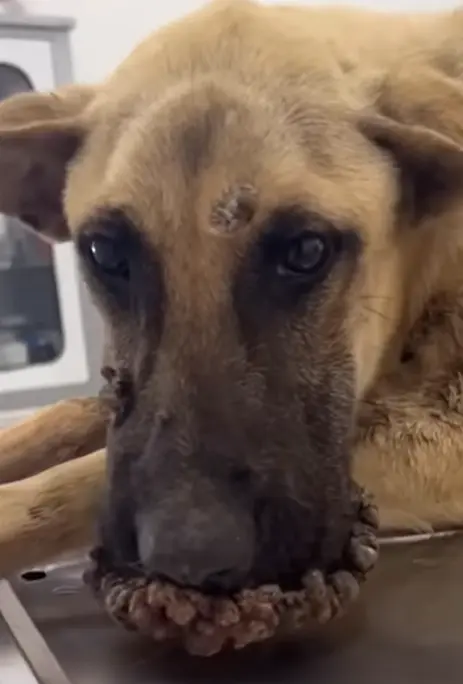
They took him straight to the clinic.
The veterinarians immediately understood how severe his condition was. The papillomas were extensive. They affected not only his appearance, but his ability to eat, to drink, to exist without p.a ìn. Treatment couldn’t wait.
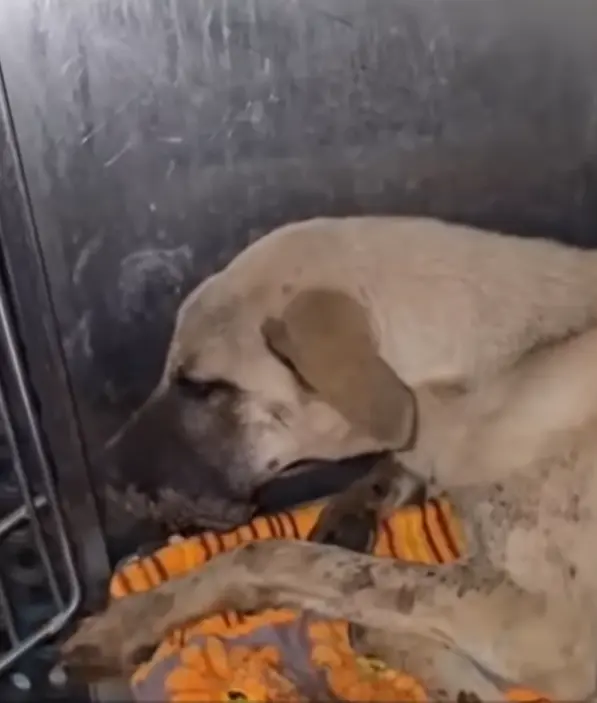
He was cleaned, fed as gently as possible, and prepared for surgery. Even then, he remained calm. Tired, yes. Weak, absolutely. But calm — as if he sensed that this was finally the turning point.
The procedure took time.
The veterinarians carefully removed every papilloma, working patiently to free his mouth from the growths that had caused him so much s.u ƒfering. When it was over, his face looked different — not perfect, not suddenly untouched by hardship — but free.
Free from p.a ìn.
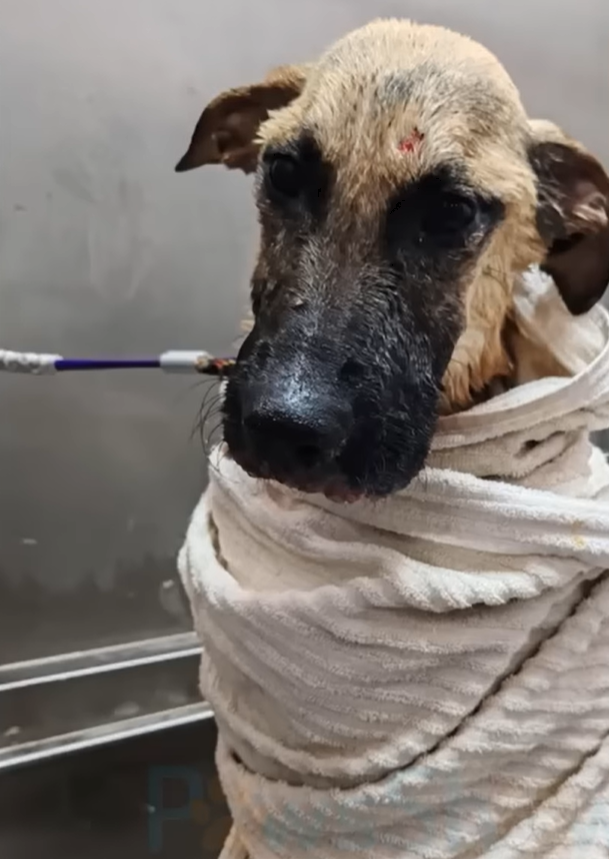
The first meal after surgery changed everything.
He ate slowly at first, unsure. Then more confidently. For the first time in who knows how long, eating didn’t h.u ŕt. There was no flinching. No hesitation. Just hunger being satisfied without s.u ƒfering.
HAC UTELU NKAR
Day by day, he improved.
His strength returned. His energy grew. His eyes became brighter. He began to gain weight — real weight, healthy weight. His body filled out, his posture changed, and the sadness that once hung over him slowly faded.
A month later, he was no longer the same dog.
He ran.
He played.
He ate eagerly, happily, without fear.
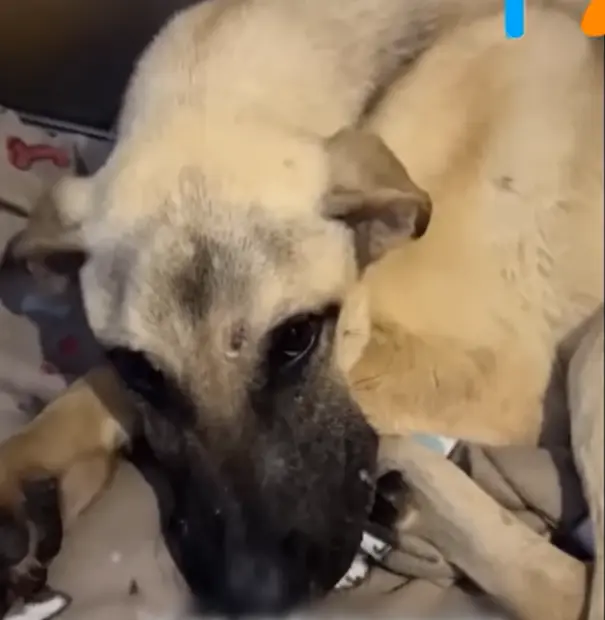
His face, once the reason people mocked him, now carried something else entirely — peace. Gratitude. Joy.
He lived surrounded by care, warmth, and kindness. The kind he had always deserved.
All because a few people chose not to be indifferent.
All because volunteers saw beyond his appearance.
All because compassion spoke louder than judgment.
Today, he lives happily — not defined by how he once looked, not broken by how others treated him, but saved by those who believed his life mattered.
And every time he eats without p.a ìn, every time he runs with confidence, every time his tail wags freely, he proves one simple truth:
Indifference h.u ŕts.
But kindness saves lives.
➕