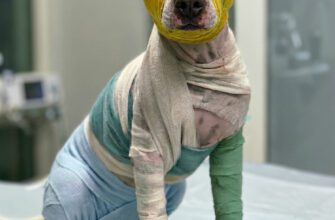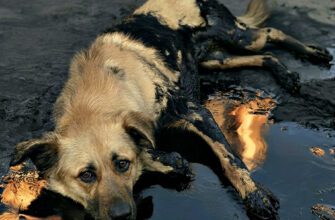
Some heart.l ℮ss people believe dogs are just objects—
things that can be th.r σwn away whenever they are no longer wanted.
This boy was dumped in front of a residential complex
after months of silent s.u ƒfering.
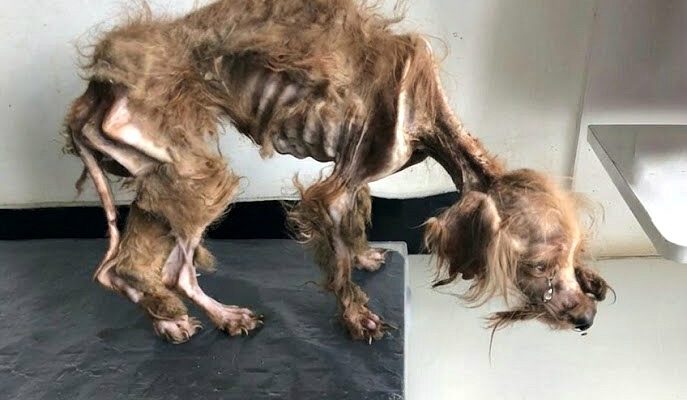
His body was completely exhausted.
He was p.a ìnfully thin, barely able to move his legs.
His ribs pushed through his skin from hunger.
Covered in s.c αrs, bugs crawling on him, his fur almost entirely gone.
He was a v.i ćtim of the worst kind of c.r ∪elty— neglect, starvation, and helplessness.
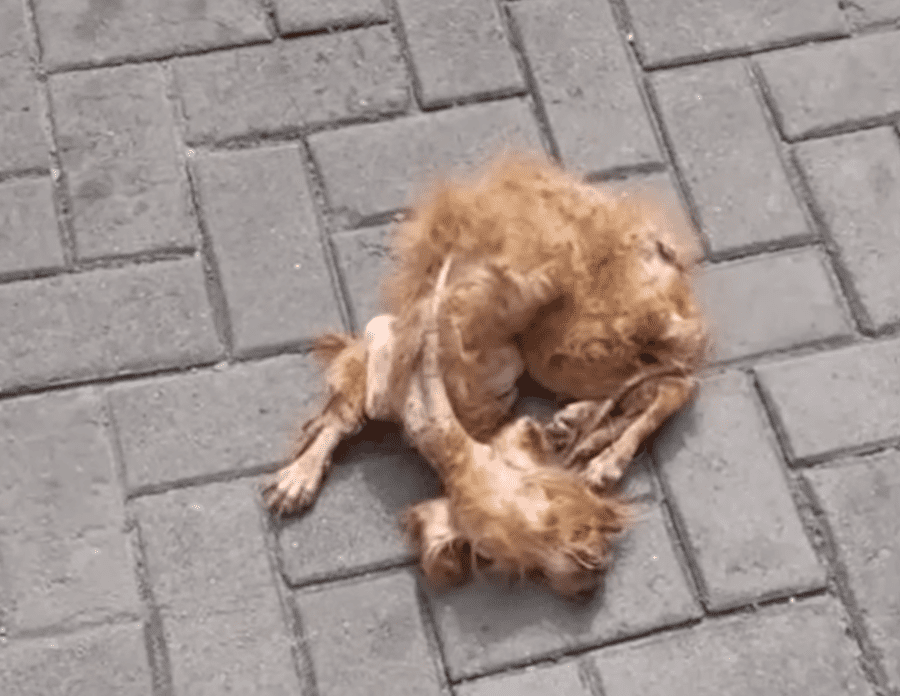
We asked the residents if anyone had seen him before.
No one had.
It was the first time he appeared there.
I don’t want to imagine what he lived through, but everything about him pointed to backyard b.r ℮eding and long-term confinement.
We rushed him straight to the clinic.

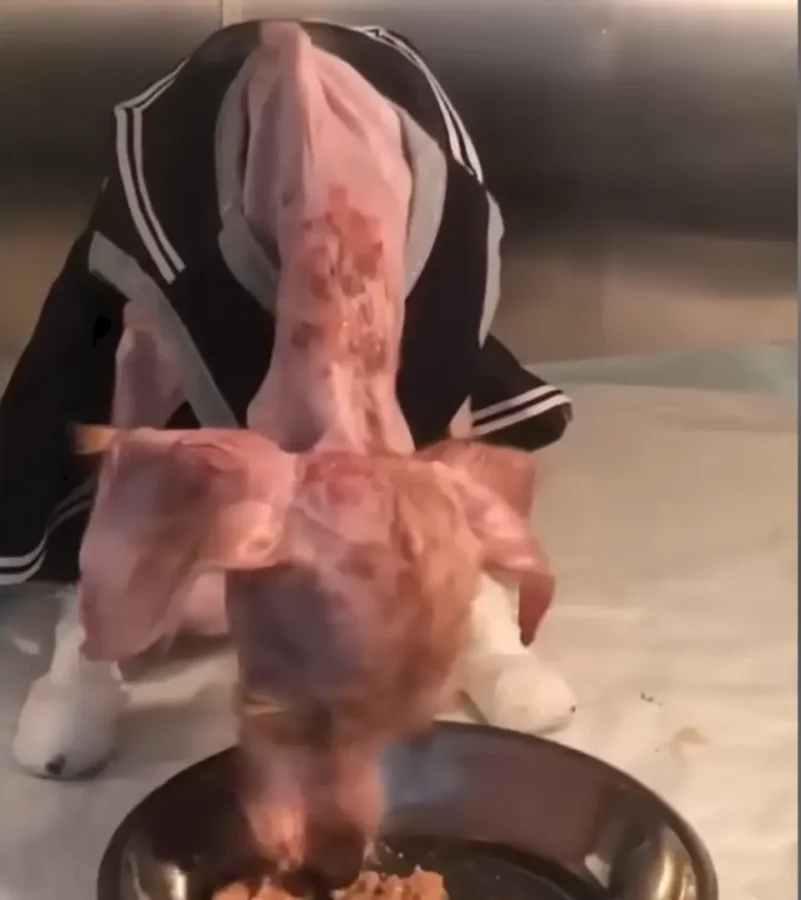
While waiting to see the doctor, I prepared food for him.
He didn’t have the strength to eat on his own.
So I fed him slowly, by hand.
He stayed calm.
Gentle with everyone.
Patient— as if he knew he was finally safe.
Warmth replaced cold loneliness.
Love surrounded him for the first time.
He was no longer a toy in the hands of m.o חsters.
His s.u ƒfering was over.
His second chance had begun.
The doctors were shocked by his condition.
He was completely drained.
He weighed only 8 pounds— less than half of what a dog his size should weigh.
As his matted fur was shaved, bed.s σres appeared.
Pressure marks.
B.r ∪ising consistent with being locked in a small cage for a very long time.
Whoever had him
was starving him to d.e αth.
The level of neglect was unbearable.
He was severely dehydrated and dangerously anemic.
His b.l σod results were de.v αstating— only 5% hematocrit.
Far below normal.
Red b.l σod cells depleted. White b.l σod cells dangerously high.
He was placed on long-term fluids.
Multiple b.l σod transfusions were required.
We named him Kaefsi.
The doctor estimated his age at around two years.
After the first transfusion, his strength began to return.
His gums slowly turned pink.
Red blood cells increased.
White blood cells decreased.
His hematocrit rose above 30%.
Nutrition had to be handled with extreme care.
His body was far too weak.
His stomach could not be filled.
Too much food could k.i łl him.
Every meal mattered.
Kaefsi received exceptional care at the clinic.
His will to survive exceeded all expectations.
Each day, he grew stronger.
His weight increased to 10 pounds.
His skin healed.
His fur began to grow back.
He started eating richer foods in carefully increased portions.
His appetite returned.
Eventually, he no longer needed restriction.
When the doctor allowed it, Kaefsi came with us to the shelter.
He had regained his strength.
His vitality was back.
Only his fur still needed time.
From the first day, he was mischievous.
Playful.
Full of life.
At his next checkup, everything looked perfect.
He had gained weight.
His coat was soft and healthy.
No one could believe he was the same dog.
Kaefsi thrived at the shelter.
Surrounded by friends.
Running.
Playing.
Living like a dog should.
His spirit shined brighter than ever as he exp.l σred the world with boundless energy.
Over time, Kaefsi became the best version of himself.
Then a kind family reached out— they wanted to adopt him.
Before his new beginning,
Kaefsi was n.e ∪tered,
fully groomed,
and vaccinated.
Kaefsi,
you handsome boy.
This family is so lucky to have you.

His new sister fell in love with him instantly.
She did everything she could to welcome him home.
From a starving, abused dog… from a discarded and exploited life…
to a cherished, beautiful boy.
Kaefsi is finally home.
Surrounded by love— and more than he ever dreamed of.

Happy endings like this mean everything.
➕