Here’s how to understand the difference.
A Common Cause: Ringworm (Fungal Infection)
One of the most common reasons for red, circular patches on the skin is ringworm, also known as tinea corporis. Despite its name, ringworm is not caused by a worm. It’s a fungal infection that thrives in warm, moist environments.
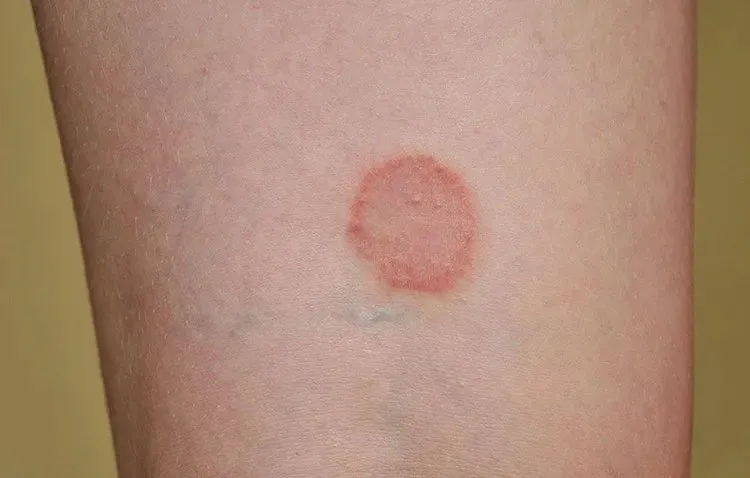
Ringworm typically appears as:
- A red, round or oval-shaped rash
- Slightly raised or scaly edges
- A clearer or lighter center
- Mild to moderate itching
Yes, ringworm is contagious. It spreads through:
- Direct skin-to-skin contact
- Sharing towels, clothing, or gym equipment
- Contact with infected pets
- Touching contaminated surfaces
If the rash slowly grows in size or new circular patches appear nearby, fungal infection becomes more likely.
Noticing red, round patches on the arm can be alarming especially when they appear in clusters or seem to slowly expand. One of the first questions many people ask is: Are these contagious? The answer depends on the underlying cause. Some circular rashes can spread through contact, while others are completely non-contagious.
Non-Contagious Causes: Eczema and Psoriasis
Not all red circular patches are infectious. Two common non-contagious conditions that can resemble ringworm are:
1. Eczema (Nummular Dermatitis)
This condition can create coin-shaped, red, itchy patches on the arms or legs. Unlike fungal infections, eczema is related to skin barrier dysfunction and inflammation—not infection. It is not contagious.
2. Psoriasis
Psoriasis may cause red plaques with thicker, silvery scales. It is an autoimmune condition, meaning it stems from immune system overactivity. Psoriasis is also not contagious, even with close contact.
The key difference is that these conditions do not spread from person to person.
How to Tell the Difference
While appearance can provide clues, it’s not always possible to diagnose based on looks alone. Here are some general hints:
- Ringworm tends to have a well-defined outer border and may gradually expand outward.
- Eczema patches often feel dry and may ooze or crust in severe cases.
- Psoriasis plaques are usually thicker and may appear on elbows, knees, or scalp as well.
If the rash worsens with steroid creams, that may suggest a fungal infection—since steroids can sometimes make fungal rashes spread more easily.
When to See a Doctor
You should consider medical evaluation if:
- The rash continues spreading
- It becomes painful or severely itchy
- Over-the-counter treatments don’t help
- You’re unsure whether it’s fungal or inflammatory
- Doctors can perform a simple skin scraping test to confirm fungal infection if needed.
How to Prevent Spread (If It’s Fungal)
If a fungal infection is suspected:
- Keep the area clean and dry
- Avoid scratching
- Do not share towels or clothing
- Wash bedding regularly
- Treat pets if a veterinarian confirms infection
- Prompt antifungal treatment often clears ringworm within a few weeks.➕