He found himself curled up among the dry leaves, his tired body trembling with the slightest breeze. The first person to spot him was a garbage collector—the dog moved cautiously, was clearly gnawed, and showed signs of long-term neglect.
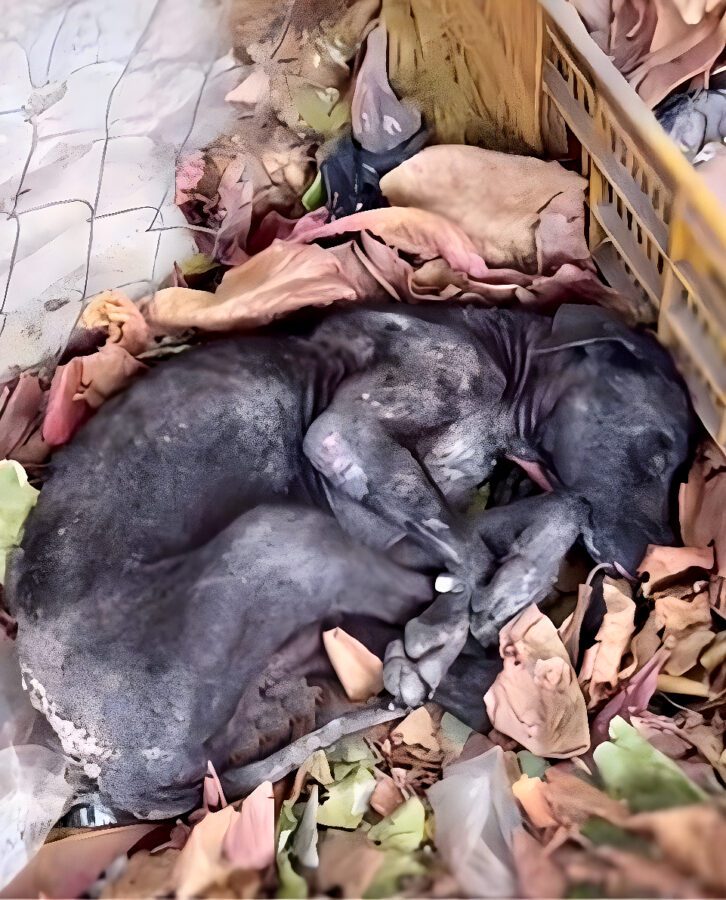
There was an almost silent longing in his gaze, as if he had been waiting his entire life for someone’s attention and warmth. Rescuers found him curled up in a dark corner, his body trembling not only with cold but also with a fear of people.
 Without delay, they wrapped him in a thick blanket and carefully carried him to the clinic—every minute seemed precious then. At the clinic, it quickly became clear how neglected this animal had been: every bone pierced the thin skin, and s.c αrs testified to years of wandering and s.u ƒfering.

Despite his exhaustion, he watched the rescue team with something akin to hope—not ho.s ŧility, but a quiet trust that this time might be different. The team worked systematically, gradually restoring his strength.
Warming and protection from the cold
Gradual feeding of nutritious portions
W.o ∪nd treatment and health monitoring
Constant presence and calm emotional care
After a few days, with regular care and patience, the first signs of improvement began to appear. His movements were still sluggish, but he increasingly looked at his caregivers with clear interest—as if learning to trust people again.
In one faint wag of his tail, the entire transformation was encapsulated: from fear to relief, from loneliness to security.

When he first wagged his tail—shyly, almost imperceptibly—it was a moment akin to a small miracle for the team. Slow rehabilitation, consistent meals, and warm gestures transformed a body fighting for life into a dog that began to respond with joy.
Summary: This dog’s story demonstrates the crucial importance of prompt intervention and constant, patient care: proper warmth, nutrition, w.o ∪nd care, and human presence can restore hope to even the most neglected animals. It’s a reminder that empathy and consistency have the real power to save lives.
Conclusions and appeal: Every life saved is proof that care and consistent help bring results—it’s worth responding when we see s.u ƒfering, because a small gesture can change someone’s fate forever.
➕