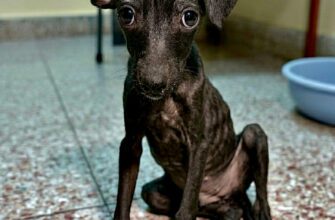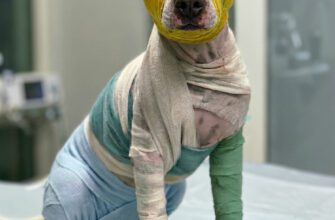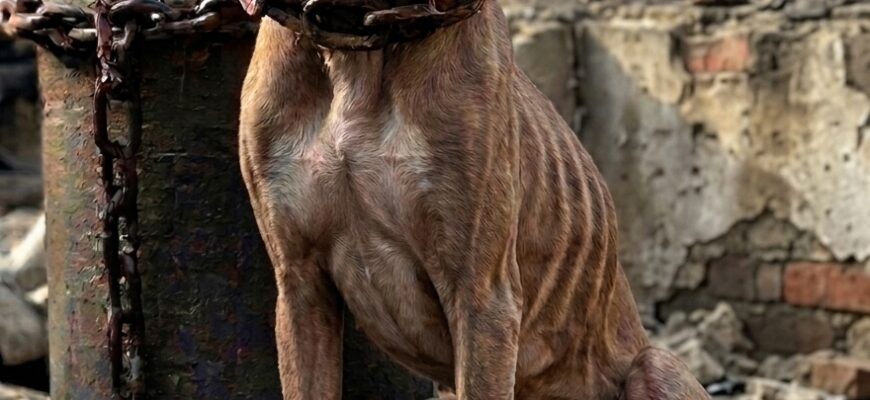
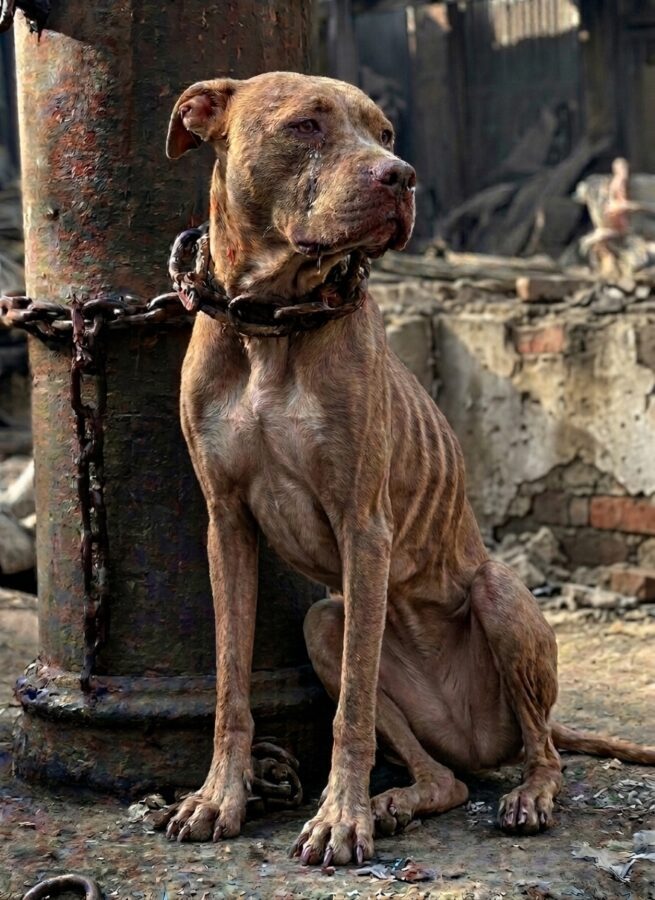
 One night, the cold and fear became especially acute. Sounds—footsteps, cars, the wind—seemed like a promise of salvation, but no one stopped. The chain held him securely to the post, simultaneously connecting him to the place and to the past he had abandoned. Despite his weakened body, a spark of desire remained within him: he tried to rise. His paws trembled, his muscles refused to obey, but the desire to get closer to the idea of possible salvation compelled him to take a step forward, not for escape, but out of hope.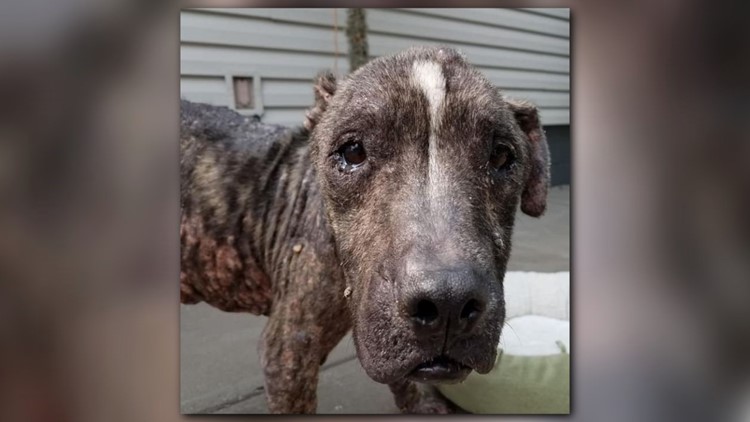
- Signs of prolonged neglect: collars embedded in the skin, weakness, hair loss;
- Behavioral consequences: apathy, avoidance of contact, lack of response to people;
Health risks: infections, exhaustion, in.j ∪ries from rust and prolonged exposure to the outdoors. - Look closely: hope lives in his eyes, even if it seems as if his whole life has passed. He doesn’t bark from aggression or c.r ɣ from pity—he simply exists, fighting for the small right to be noticed.
If you encounter such a picture, don’t pass it by. Help can take many forms: physical—food, water, shelter; medical—wound c.a ŕe and examination; human—attention, warmth, and voice. Sometimes one action can change an animal’s fate and restore its faith in people.
Conclusion
This dog’s story is not an isolated case, but a reflection of a common problem: many animals are unwanted and forgotten. Rusty chains and hunger are only visible traces; even worse is the loss of trust and meaning. But even in the most hopeless situation, there remains a chance: human kindness, well-directed help, and simple attention can restore life and the ability to believe. Help those around you—sometimes salvation begins with one look and one step forward.
If you haven’t subscribed yet, we’ll probably never see each other again. Subscribe to see stories like this every day. The subscribe button is located under the video in the right corner. Thank you, dear reader.
➕